Current Combat Robot

Shin Twister

Shin Twister is my second combat robot and my current 1lb PLAnt-class shell spinner. Almost everything outside the electronics has to be 3D printed and stay under one pound, so the project became a mix of CAD, material testing, electronics packaging, and learning how much energy a printed shell can survive.

Project Specs

Bot Type Shell spinner
Main Constraint Mostly 3D printed
Focus Material testing
Status Active redesign

Build Log

Overview

Shin Twister is my second combat robot. It competes in the PLAnt division, which means all components except the electronics have to be 3D printed and the whole robot has to weigh under a pound.

I wanted to build a shell spinner after seeing local competitors use them. The idea is that the entire outside shell rotates with teeth sticking out, storing a large amount of kinetic energy while protecting the internal chassis. I also used this robot as a way to experiment with different materials and electronics.
Design

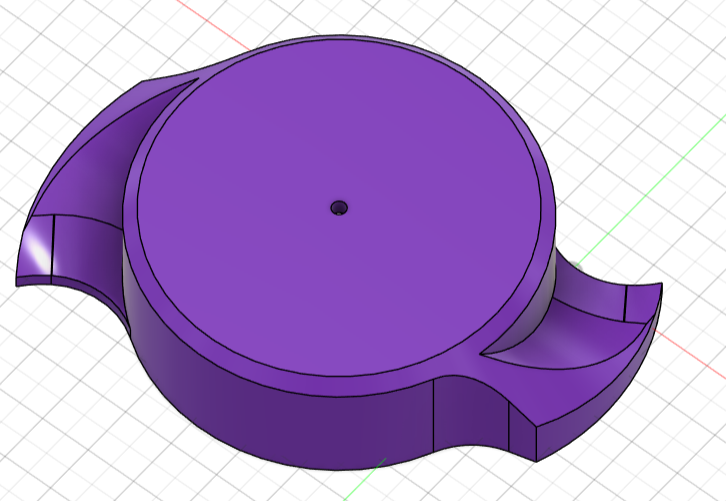
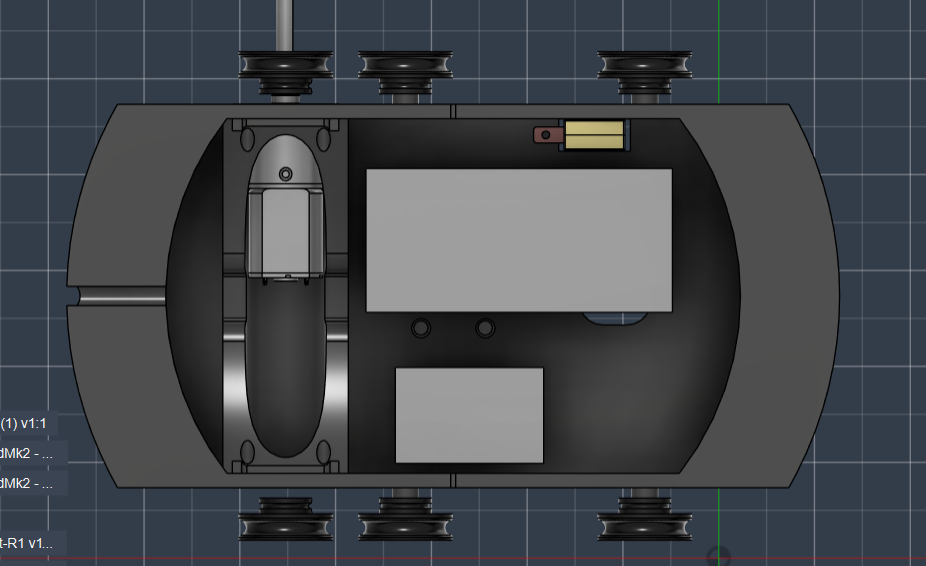
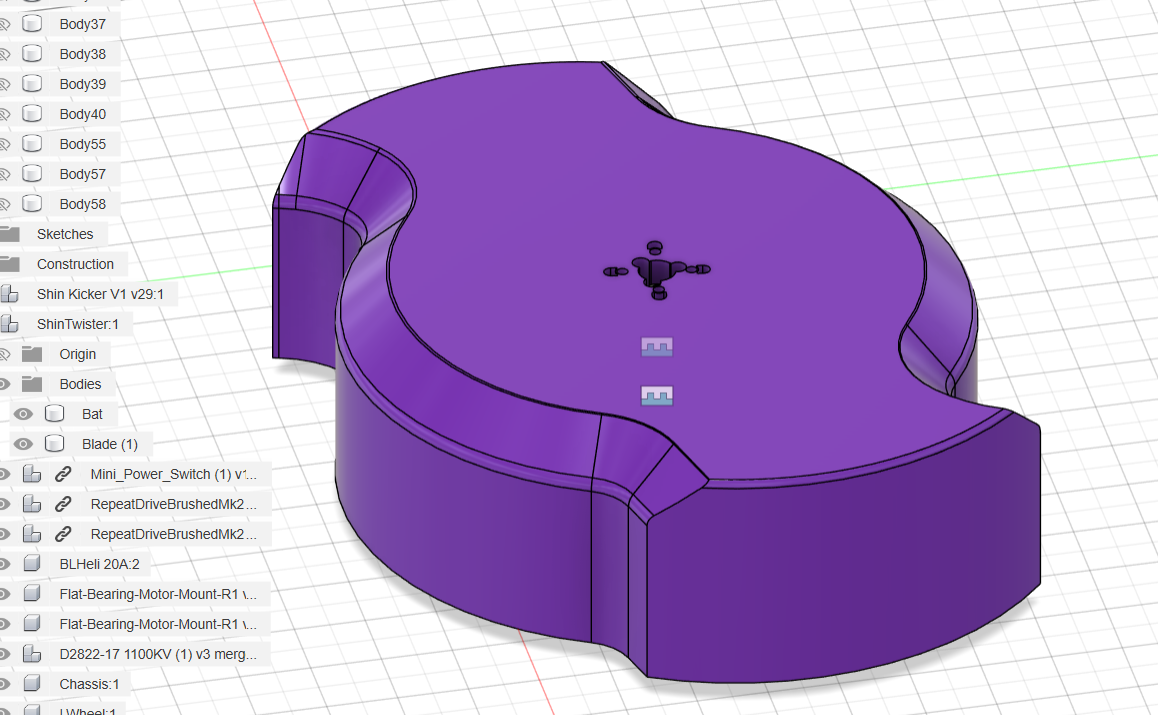
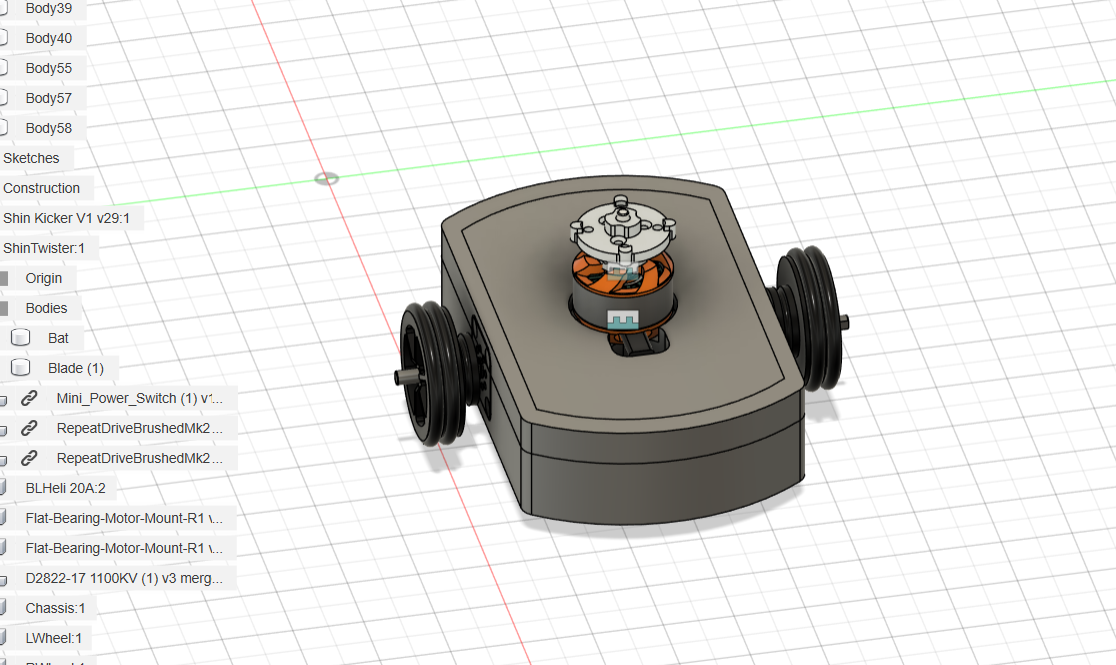
Starting with a rough idea, I jumped straight into CAD to see if it was actually possible. I took the tooth off an older Shin Twister weapon design, scaled it up, and turned it into a full shell. Then I designed a chassis to fit inside it and hold the electronics.

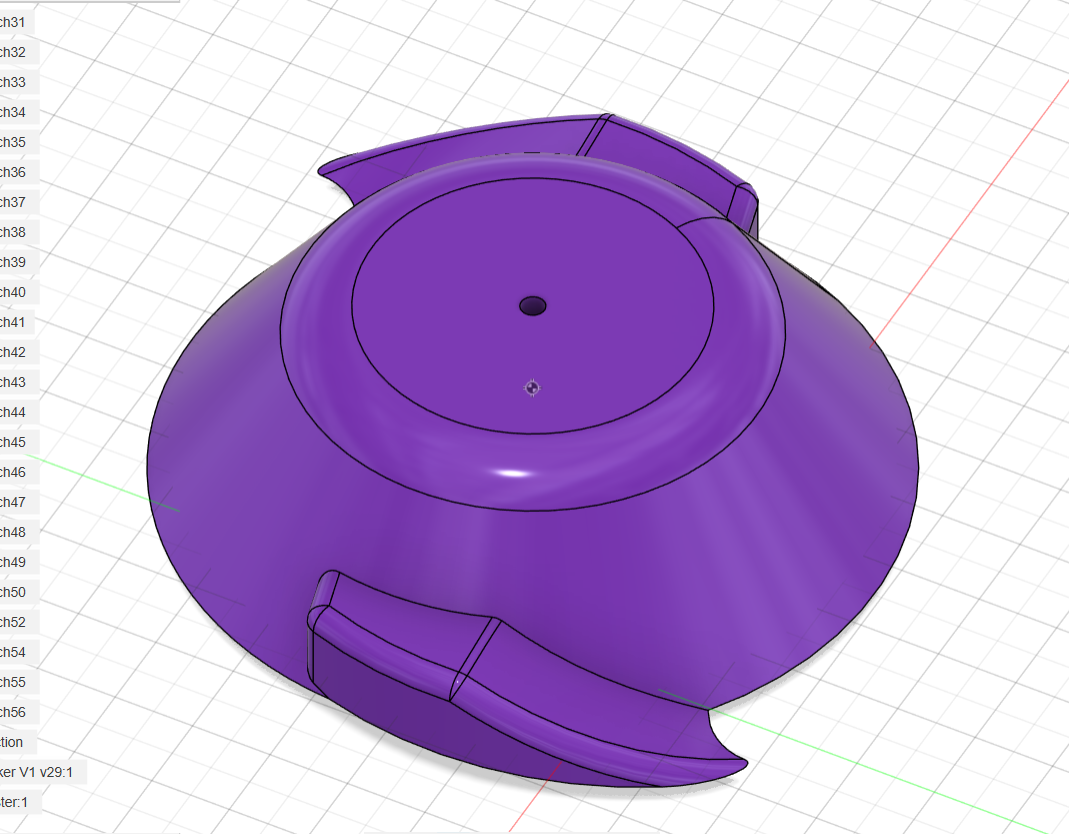
Feedback from other competitors made two problems obvious: the shell was way too large, and the motor I was using was way too small. I swapped to a large 2808 motor meant for 20 lb drones and refined the shell significantly. After more revisions and feedback, I settled on a design I was satisfied with.

Shin Twister V1 weapon CAD

V1 Weapon

The first full-shell weapon concept.

Shin Twister V1 chassis CAD

V1 Chassis

The internal chassis designed to hold the electronics.

Shin Twister V2 weapon CAD

V2 Weapon

A revised shell after feedback on the first version.

Shin Twister V3 weapon CAD

Final Early Shell

The version I landed on after the first major design cycle.

Prototype

First Build

Spin-Up Problems

I started actually building it, which was fairly simple because it used essentially the same electronics as Shin Kicker.

Once I first spun up the weapon, I immediately found the issue: the massive shell spinning around 370 mph made the entire robot uncontrollable. To help at least a little, I added an LED so I could tell which direction the robot was pointing, which concluded the initial prototype.

First Test

The first spin-up where the control problem became obvious.

Testing And Revision

Arena Test

Once I was satisfied with the design, I tested it in my arena and started seeing how it behaved against another object.

Rice University: Robot Rumble

Competition

Arriving At Rice

With a finalized version of Shin Twister, I entered a local event hosted by Rice University. It was much smaller than my previous event and mostly made up of the Rice robotics team.

When I got there, I unloaded everything and tested the bot on their arena because it had a very bumpy floor. The first spin-up vibrated much more than before, making the robot even more unpredictable. I did not have many options, so I accepted it and continued with the tournament.

My first match was against a scary drum spinner named Phyic Flak. It looked ordinary from the outside, but it had a powerful motor and a large battery, which let the drum reach very high speeds.

Rice Robo Rumble event

Rice Robo Rumble

The event where vibration, wiring, and orientation became major lessons.

Match One

The fight went badly. I maxed out weapon speed because it felt like the only way to do real damage, but the power distribution block slowly lost grip on vital power cables, starting with the drive motors and ESC. With no drive, I got hit in the right spot, flipped over, and lost the match.

The big lessons were to secure my power cables much better and to avoid maxing out weapon speed without a real reason.

Match Two

My next match was against a smaller tail-spinner made by one of the Rice team captains. I wish it had gone better, but it did not.

The match became a crowd favorite. I had almost no control, bounced off the walls, got flipped on my side, spun extremely fast, lost both wheels, and eventually settled upside down.

Shin Twister match aftermath

Aftermath

Because the inside section spun instead of the shell, parts rubbed together and created enough heat to melt the front of the chassis. The battery nearly caught on fire from over-amping. The lesson was simple: never spin the weapon unless the robot is right side up.

Rumble

For fun, I joined a rumble, which is a match with up to 10 bots. This one included a few bots and, somehow, a plant pot. The event ended with a lot learned about how to improve the design.

Redesign

After Rice

What Needed To Change

After the Rice event, I learned a lot of things I had not thought about beforehand. I made a list of improvements before the next competition:

  • Improve weapon balance to reduce vibration.
  • Use new high-discharge batteries to prevent over-amping.
  • Change from only 2WD to at least 4WD for better control.
  • Find a way to prevent the robot from staying flipped over.
  • Make the electronics easier to swap out and repair.

With a clear list of changes, I was ready to get back into CAD.

Material Problem

Last-Second Realization

Right before the next competition, I realized the shell instability was not just a design problem. The shell was spinning so fast that centrifugal forces warped the plastic while it was spinning, causing imbalance.

I took the risk of switching to a sturdier material, Polymaker PLA PolyLite, hoping it would perform better. With no time left to test the new material, I had to hope it worked.

Tank drive CAD concept

Tank Drive

I first looked at improving drivetrain control by using tread-style tank drive instead of wheels.

Tangent drive CAD concept

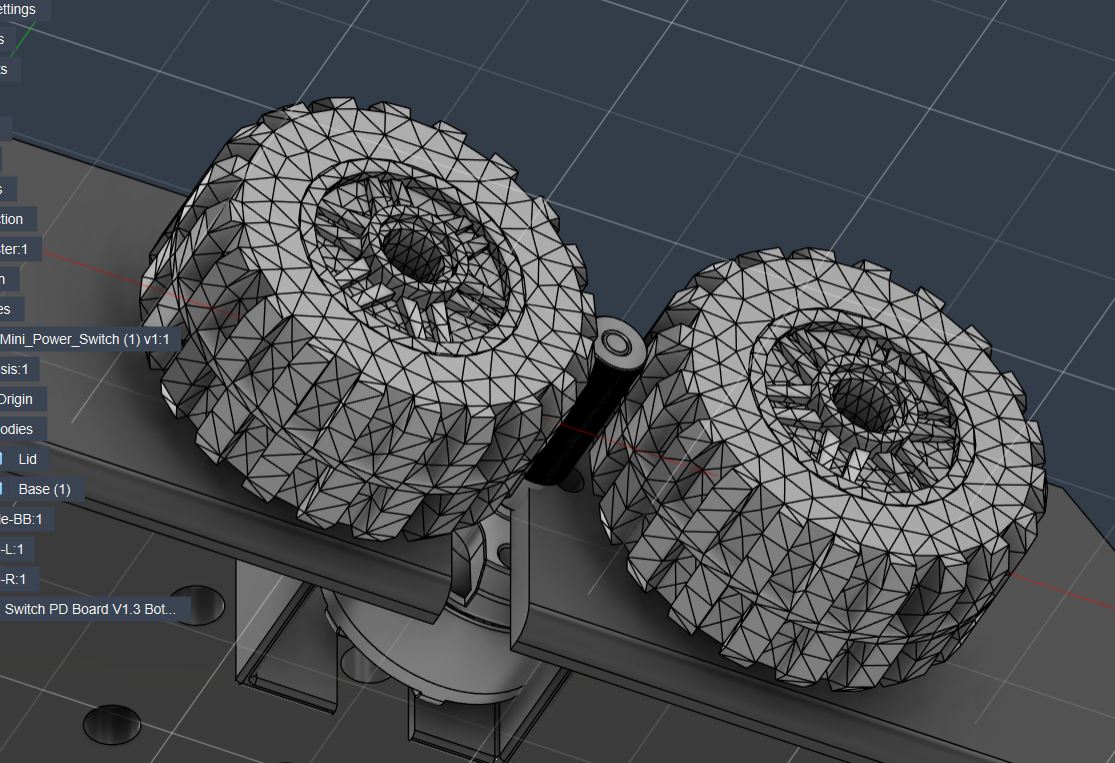
Tangent Drive

I then found tangent drive: a brushless motor sandwiched between two wheels, using friction to spin them quickly while staying compact and repairable.

New power distribution board CAD

Electronics

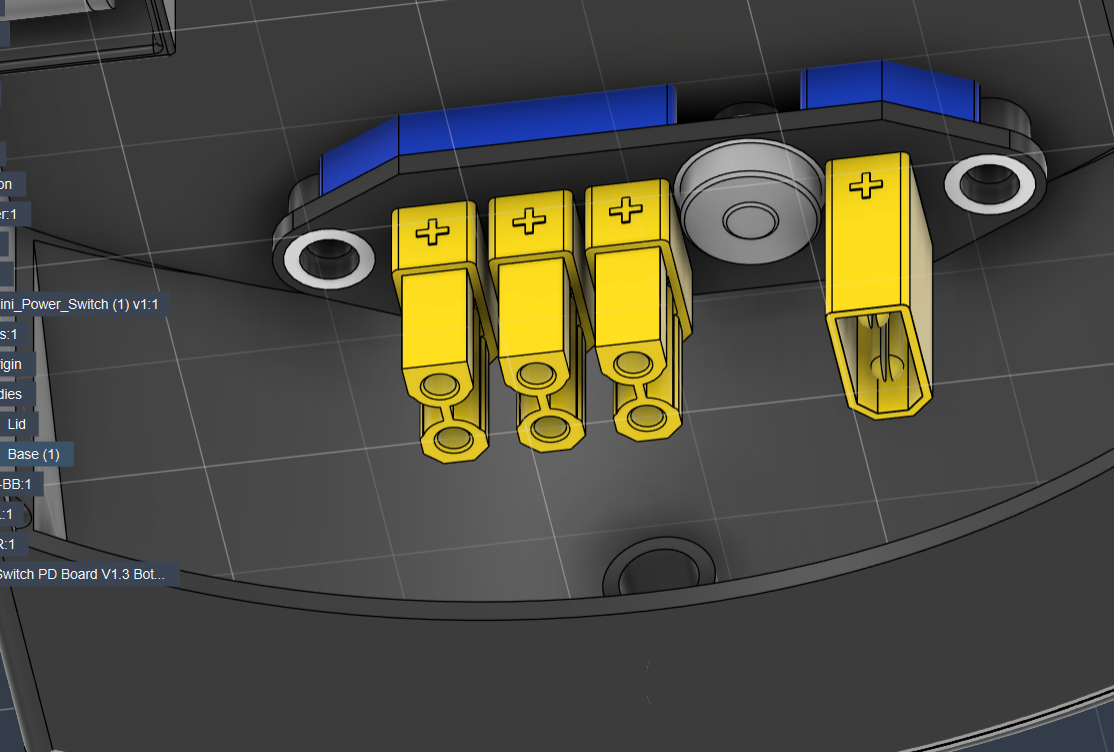
I redesigned the electronics around brushless drive and universal connectors like XT30s and MR30s, making testing and repairs easier even though it added weight.

Cat ear CAD concept

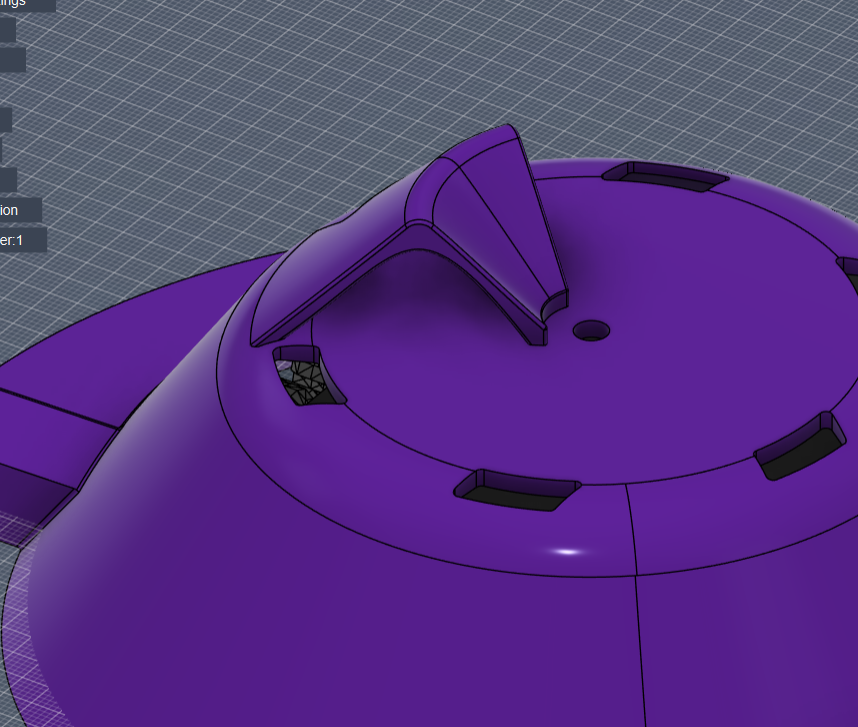
Cat Ear

I added the “Cat Ear” so the shell would sit unevenly upside down, hopefully reducing the chance of staying flipped.

Stress Simulation

I used Fusion 360 simulations to help balance and refine the shell.

BattleRC Testing

I also used BattleRC to collect data on how the design might perform in a match. The Cat Ear did not meaningfully prevent flipping, but with little time left, I kept it.

Interactive CAD

Texas Robot Combat: Robot Rodeo 2025

TRC Robot Rodeo

Higher Education

When testing started, the instability was better but still not perfect. There was not much I could change at that point.

My first match was against Higher Education, one of the highest-ranked flipper robots in Texas. I did not realize in time that the stiffer shell material was more brittle and prone to shattering, which is exactly what happened. I kept driving until I tapped out because I lost both wheels.

The driver of Higher Education was a great sport. After the fight, he shared tips on how to improve, and I gave him my broken shell.

Match One

The shell shattered, the wheels came off, and the material choice lesson became very real.

Double Elimination

Dust Reaper

Since the tournament was double elimination, I had one more match before being fully out. My next opponent was Dust Reaper, a vertical spinner.

Going in, I knew the shell would probably shatter off again, so my strategy was to make it come off as quickly and as controlled as possible. That way, I would still have a driving base that could maybe outrun him. Unfortunately, my driving was not good enough.

Like I hoped, the shell came off easily and left the base intact. Unfortunately, Dust Reaper cornered and flipped me a few times, shredded my wheels, and forced me to tap out. Overall, the event was great, and I learned more than I could have asked for while meeting a lot of great people.

Match Two

The shell came off as planned, but the base still had to survive and drive well enough afterward.

Key Takeaways

Physics Wins

Ideas only matter if the physics lets the robot survive them.

Materials Matter

Changing plastic can fix one issue and create a totally different failure.

Repairability Counts

A combat robot has to be designed for fast fixes, not just clean CAD renders.

Test For Real

Simulation helps, but it does not replace real impacts, bad floors, and loose wires.

Redesign 2

After TRC 2025

What Needed To Change

After lots of feedback and real world testing from TRC, I realized that having the shell be directly driven by the motor would be extremely hard to stabilize, and would be even harder to keep in the strict 1lbs weight budget. Therefore, I would need to pivot. At TRC, there was an extremely successful ring spinner called Double Stuff, that nearly won. After the event, I had a discussion with the builder, Cole, who studies Aerospace Engineering. His biggest advice was to pivot to using a gear driven shell-ring fusion, and chop off the top of the shell, allowing more weight to be allocated to other things. He also advised me to use Duramic PLA+ as it was comparably lighter and had better impact resistance.

From there, I had a few main things to fix:

  • Switch to a Hybrid Shell-Ring spinner for better stability and weight savings
  • Since the top of the robot is now exposed, create a proper self righting mechanism
  • Do more testing with different materials
  • Potentially redo some electronics for easier wiring and less weight

This would most definitely be my largest redesign yet, but I was more than up for the challenge.

Shorter Shell

New shell

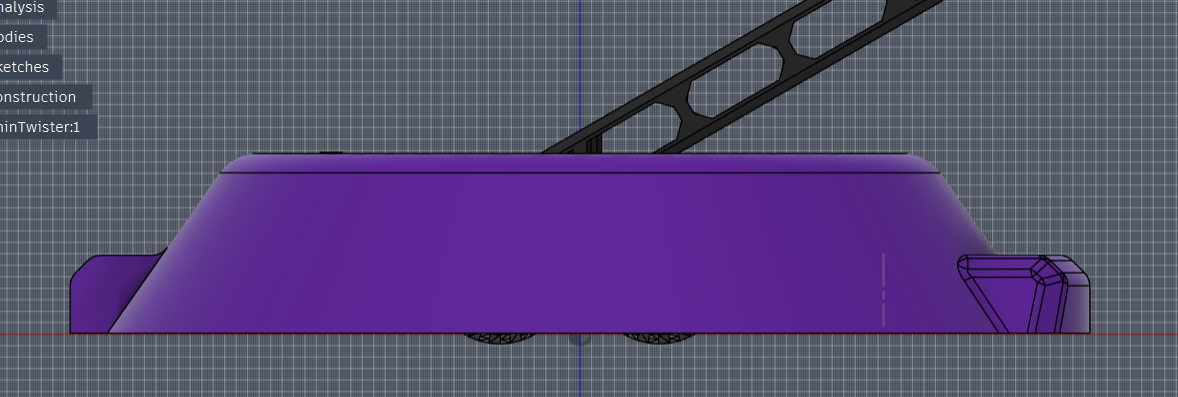
The first thing I did was redesign the shell and shorten it down. The height I chose for it was mostly reliant on how tall my weapon motor was going to be, plus room for mounting it. This would allow the overall footprint to be as short as possible

Shell Drive Gear

Gear Driven Shell

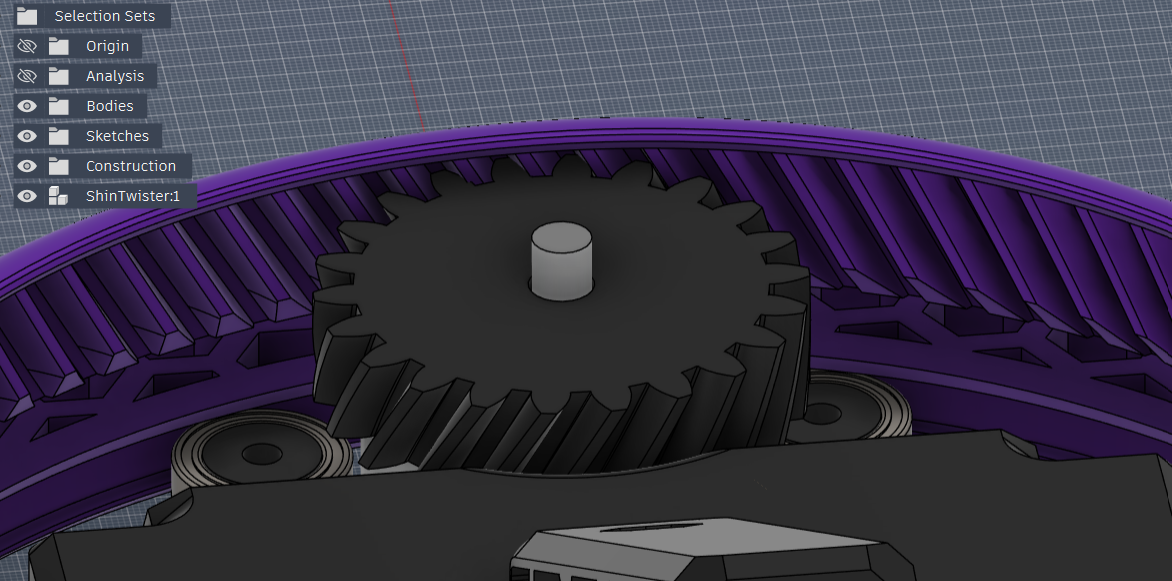
Once the shell was at least partially designed, I started thinking about how I would drive the shell, and eventually settled on herringbone gears, as it allows for some slop, and has more efficiency compared to normal gears

Honeycomb Patterned Shell Internals

Weight Reducing Honeycomb Pattern

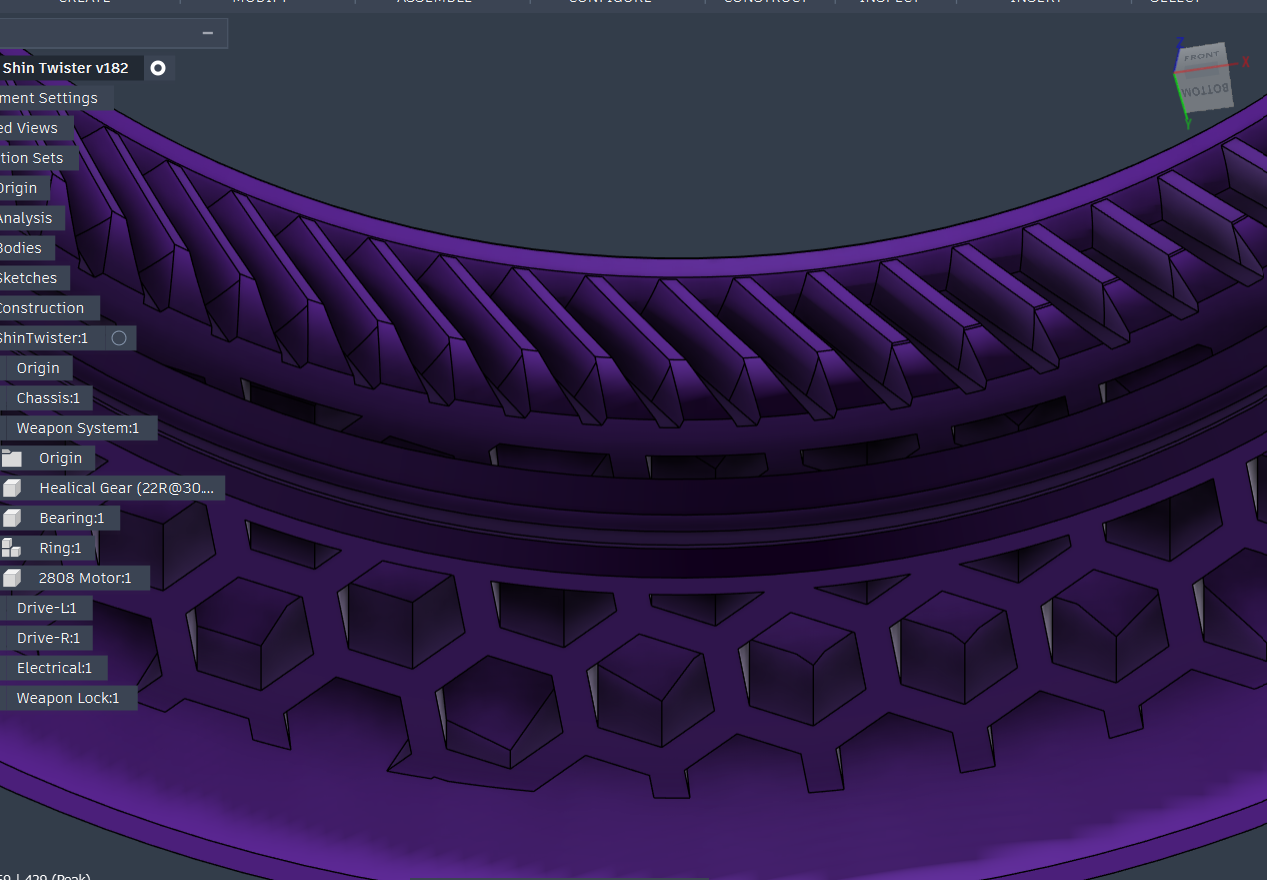
I quickly realized that with all the design changes, the robot would be overweight. With a fairly optimized chassis, my only option was to reduce weight on the shell. I then saw internal regions on it that were not load bearing, yet were completely solid. This was a complete waste of weight, so I decided to reduce their weight by applying a honeycomb pattern on the. This allowed for similar strength, but saved upwards of 122g.

Self Righter

Self Righter

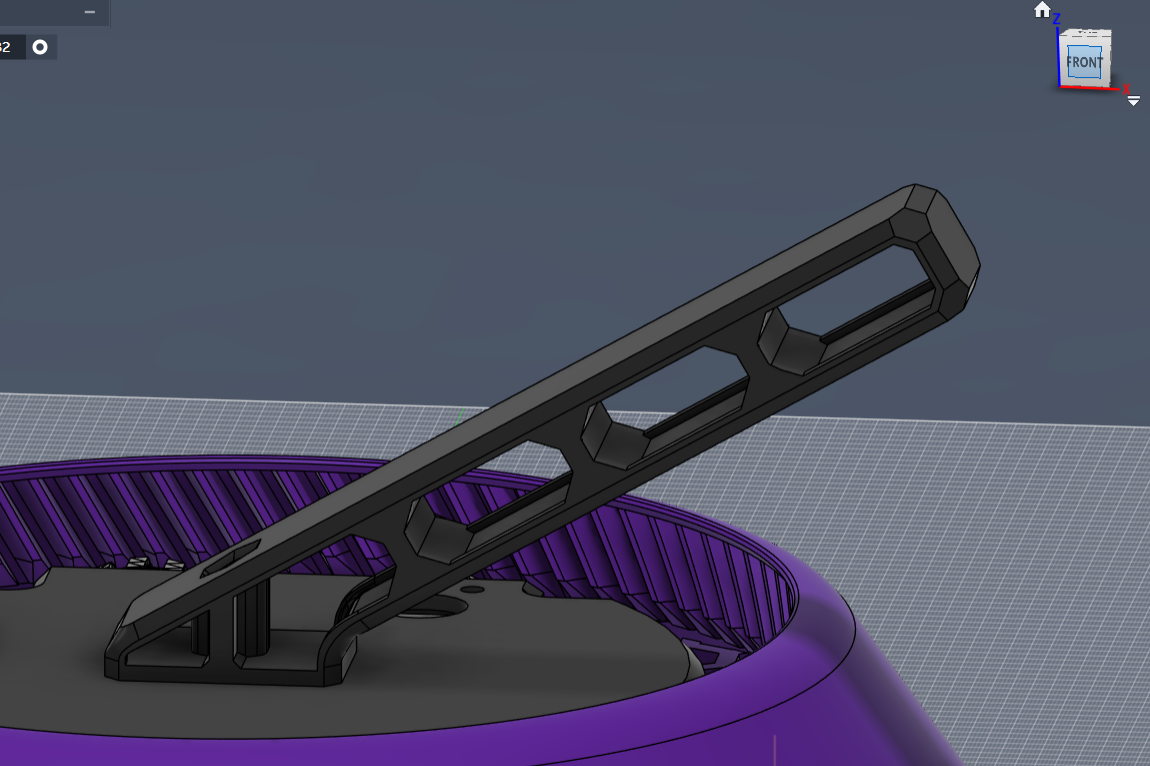
Finally, I was able to add a proper self righter that makes it extremely hard for the robot to stay flipped over. Since the bar extends slightly past the outer diameter of the shell, as long as the shell is spinning, it can flip itself back over.

Catalyst

Electronics

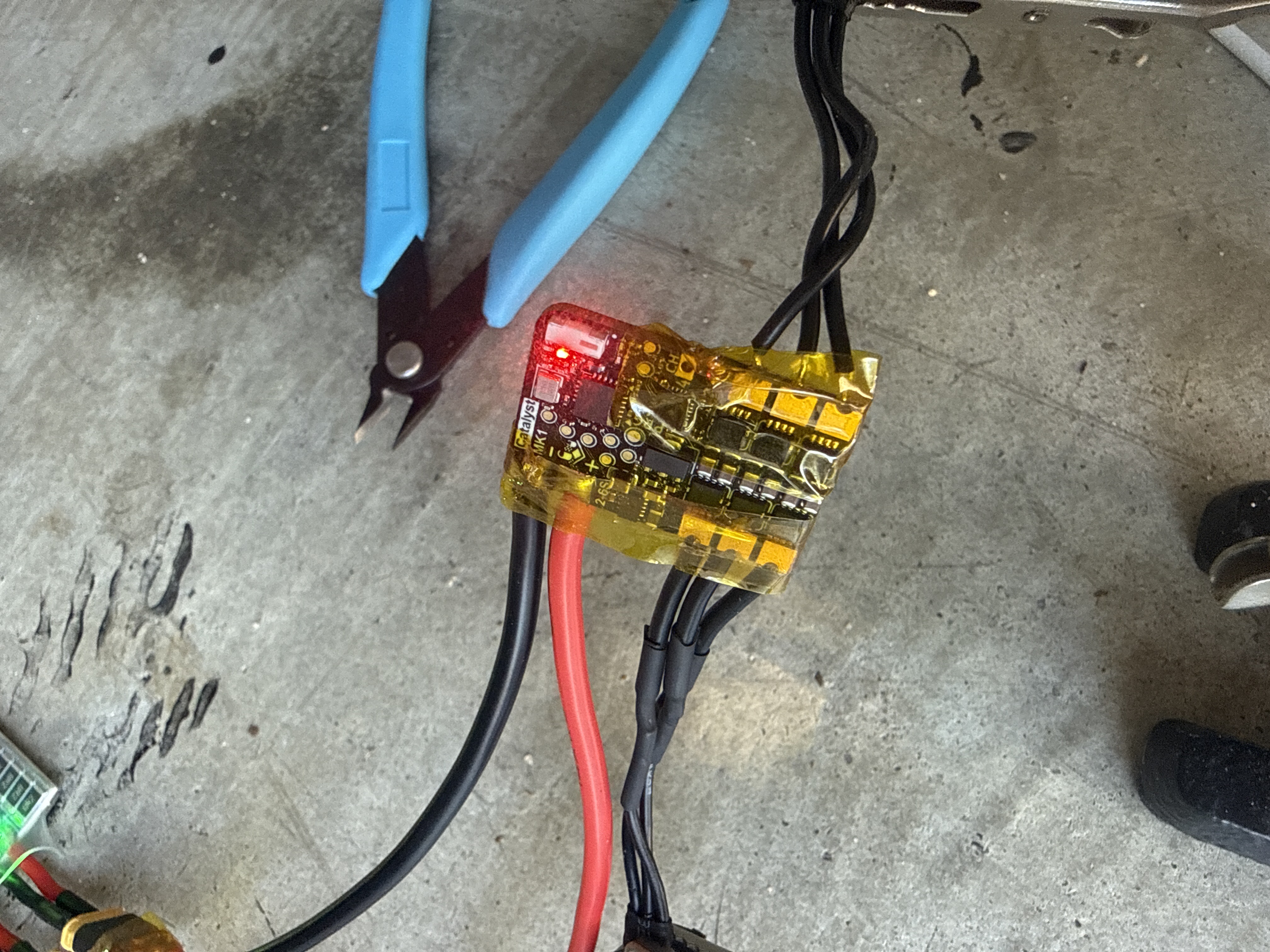
With a working design, I pivoted to shrinking down the existing electrical design. The first thing I did was to replace the receiver and dual drive ESC with a Catalyst Mk1 which is able to accomplish both functions, while being less than 4g. Since I now had less things that needed to be powered, it also let me completely remove my power distribution board. All of this means that the entire electrical system takes up less that 3/5 of the space the old one did.

Testing

Now it was time to test it. Unfortunately, the shell would pop off after large hits. This was an issue that was caused by the bearings I used to keep the shell in place being too shallow and not going deep enough into the shell. Sadly, I didn't have enough time to fix as the competition was in only 2 days.

Interactive CAD

Texas Robot Combat: Robot Rodeo 2026

TRC Robot Rodeo

Bodacious

My first match was against a vertical spinner robot that was a clone of a different one online, which means I'd have seen it before, and I was expecting the shell to pop off like it did in testing.

I did correctly predict that the shell would come off, but I did not predict that It would split in half, leaving me completely defenseless.

After further investigation, I found out that the area it split at was where the shell was the thinnest, and where there was a slight crack that came from 3D printing defects.

Match One

The shell shattered due to a defect in printing.

Jackrabbit

After getting a bye in round 2, I approached my next match with a new mentality:

One of the reasons my shell kept shattering was that I was spinning the it too fast. This also meant that I wouldn't be getting as much bite since the weapon tooth would slip off my opponent instead of gripping them. So for this next match, I need to keep my weapon's tip speed low.

While the shell did eventually come off, it did last for much longer than I would have expected, getting some good hits on Jackrabbit before I ramped up the speed above it's threshold. After the shell came off though, my drive became completely exposed, and eventually got hit to the point that both motors fell out of their sockets. Somehow, I kept driving on, and this became the first match that I have ever survived. I had survived!

Match Two

The shell survived longer than expected, and I stayed alive the whole match

Rumble

The last match took a massive tole on my drive, and I ended up having to completely redo the electronics on the spot. Sadly, I couldn't return it to full functionality, but I did have just enough to participate in a for-fun fight with 2 other full body spinners, also known as a Rumble. However, the other 2 robots were in the "Full Combat Ant" class, meaning they had all-metal blades. While in a regular fight I would have been more cautious, I just decided to throw mine into there and see what happens.

The one thing I didn't realize is that none of us can properly drive our robots, which led to a fun fight.

This match was extremely fun, and was very entertaining to many people. Thank you to all the organizers of the event, this was definitely the most fun and educational competition I've been to.

Rumble

The "Circle Bros Only" fight

Key Takeaways

Faster ≠ Better

A slower weapon can be a better weapon

A mess of cables makes things hard

Each cable is a failure point, reducing them and keeping them organized makes repairs easier.

Shrink the footprint

A smaller robot means more weight can be put in the weapon

Start earlier, Test earlier, Fix earlier

The more time I give myself to redesign and test, the more time I have to fix and revise things.